
SCOTLAND HOUSE CLEARANCE
Large House & Mansion Clearance in Scotland
Specialist clearance of large houses, mansions, country residences, manor houses and substantial private estates throughout Scotland. A discreet, carefully planned service for families, executors, solicitors and property owners.
Request a Free Large House Clearance Quote
Large Properties · Estates & Outbuildings · Valuables Recovery · No VAT Charged
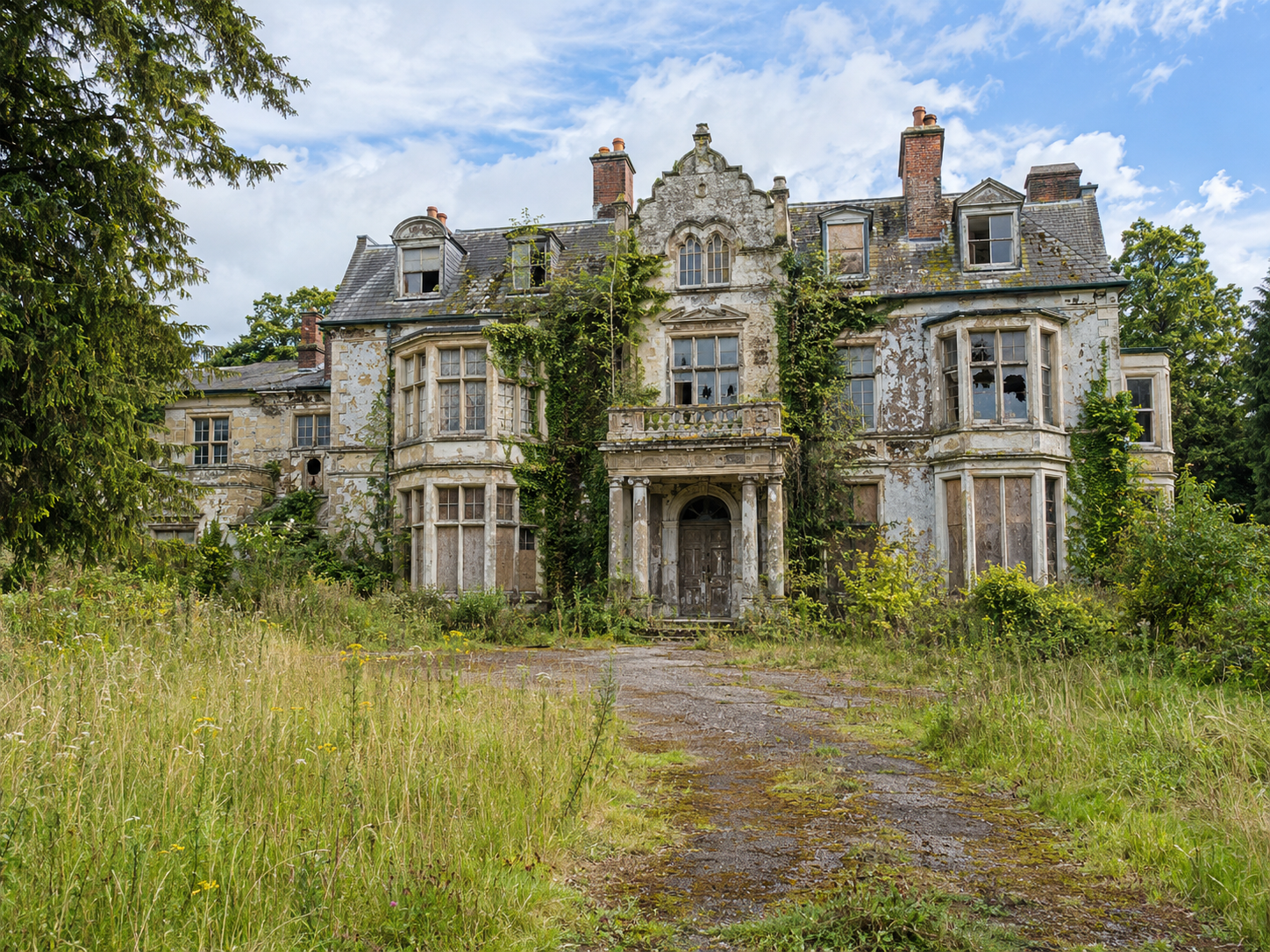
Clearing a large house is very different from emptying an ordinary two or three-bedroom property. A substantial country residence may contain dozens of rooms, multiple floors, attics, cellars, servants’ quarters, garages and outbuildings, each filled with furniture and possessions accumulated over several generations.
An imposing house might have been occupied by the same family for fifty years or more. Behind its doors there may be valuable antiques, inherited furniture, paintings, jewellery, silver, important family papers and personal belongings which have not been examined for decades.
When an owner dies, a family decides to sell, or a long-empty property is finally brought back into use, clearing its contents can become a considerable undertaking. It requires planning, suitable transport, practical experience and, above all, clear instructions about what should be retained.
At Scotland House Clearance, we offer a discreet service for large houses and substantial residential estates, helping authorised owners and representatives organise the contents and arrange the appropriate clearance.
Specialist Large House and Mansion Clearance
The sheer scale of a large property can make clearance difficult to organise. What appears to be a manageable number of furnished rooms may, on closer inspection, involve enormous quantities of household contents.
A large house may contain an extensive library, multiple reception rooms, bedrooms, dressing rooms, studies, storage cupboards and kitchens, together with years of accumulated possessions in rooms that are rarely used.
Our approach begins with understanding the property and the instructions of the person responsible for it.
We can discuss full or partial clearance, including:
- Large detached houses and substantial family residences.
- Mansions and traditional manor houses.
- Scottish country houses and private residential estates.
- Large inherited and probate properties.
- Multiple-storey houses with extensive room contents.
- Properties with cellars, attics and extensive storage areas.
- Associated garages, stores and domestic outbuildings.
- Long-empty or severely cluttered large houses.
Not every client wants the entire house emptied. Some families intend to retain antique furniture, paintings or sentimental possessions while removing more ordinary household contents. Others need everything cleared before a sale or refurbishment.
The clearance can be planned around those requirements rather than treating every room and every item in the same way.
Country House, Manor House and Mansion Clearance Throughout Scotland
Scotland has an extraordinary variety of substantial private residences, from traditional stone-built country houses to Victorian mansions, Georgian townhouses and large detached properties built during more recent decades.
These homes often have very different clearance requirements.
Country Houses and Rural Estates
A rural country house may have a long private driveway, limited parking for large vehicles, attached service buildings and several outbuildings. Transport and access arrangements need to be considered before clearance begins.
Where household contents are spread across different buildings, it may be sensible to organise the clearance in phases, beginning with the principal residence and dealing with other agreed areas separately.
Mansion and Manor House Clearance
Mansions and manor houses can contain large quantities of substantial furniture, including antique dining tables, wardrobes, bookcases, display cabinets and bedroom suites.
Some pieces may have financial or historic importance, while others are simply difficult to remove because of their size, weight or position within the building.
Particular care may be needed around narrow staircases, decorative plasterwork, original floors and period architectural features.
Large Townhouses and City Residences
A substantial Edinburgh or Glasgow townhouse may contain four or five floors, basement rooms and extensive storage areas, while offering limited parking or vehicle access.
These conditions can make removal more complicated than in a similarly sized rural property with unrestricted access.
Large Inherited House Clearance for Executors, Families and Solicitors
When a substantial family house forms part of a deceased estate, the responsibility for dealing with its contents can be especially demanding.
A property may have belonged to several generations of the same family. Its rooms might contain inherited possessions, important documents, valuable collections and furniture whose history is not immediately known.
It can be difficult for executors to determine what should be retained, valued, offered to beneficiaries or removed.
We can work with executors, solicitors and authorised family representatives to discuss a practical clearance plan based on written instructions.
Where suitable, the work can be organised in stages:
- Identify rooms and belongings requiring examination.
- Set aside documents, family photographs and potentially valuable possessions.
- Allow authorised representatives to inspect or arrange valuation of selected items.
- Separate furniture and effects designated for retention.
- Clear the remaining agreed household contents.
- Discuss any subsequent cleaning or additional services.
Where probate, confirmation or other estate administration is relevant, the executor or solicitor should determine when contents may lawfully be sold, distributed or disposed of.
The purpose of a planned clearance is to reduce the burden on those administering the estate while respecting their responsibilities and instructions.
Finding Antiques, Jewellery, Valuable Collections and Important Paperwork
One of the most important aspects of clearing a large house is deciding what should be examined before anything is removed.
In a smaller property, the owner or family may already know where most valuable possessions are kept. In a mansion or country house, however, items may have been stored away in unused bedrooms, cupboards, trunks, cabinets and attic rooms for many years.
A seemingly ordinary box could contain family correspondence, silver, old photographs or jewellery. An unfamiliar piece of furniture may turn out to have considerable age or provenance.
Items that may deserve particular attention include:
- Gold and silver jewellery, watches and precious metals.
- Antique furniture, clocks and decorative objects.
- Paintings, prints and other works of art.
- Coins, medals and specialist collections.
- Silverware, ceramics, glass and collectables.
- Books, manuscripts, letters and family archives.
- Wills, property documents, deeds and estate records.
- Personal photographs, keepsakes and sentimental possessions.
Where requested, we can discuss a pre-clearance search for important or potentially valuable belongings before the main removal work begins.
Selected items can be separated for the authorised client to examine. Where a collection may have significant financial value, an appropriate independent valuation may be advisable before disposal or distribution.
Free Pre-Clearance Asset Recovery Search
Our pre-clearance asset recovery service can help identify items of potential value within a large property.
If nothing of value is found during an agreed asset recovery search, there is no asset recovery search charge.
Any remuneration relating to recovered valuables is discussed and agreed separately with the authorised client. House clearance work is quoted independently.
For executors and families, the aim is to prevent important possessions from being overlooked during the clearance of a large and heavily furnished house.
Clearing Large Properties with Multiple Rooms, Attics, Cellars and Outbuildings
In a large house, the rooms used every day may represent only a small proportion of the property’s contents.
Attics might contain decades of stored furniture and clothing. Cellars can hold old household equipment, boxes, tools and material that requires careful assessment before removal.
A substantial residence may also have former staff accommodation, domestic storage buildings, garages and workshops.
A complete assessment should establish precisely which areas are included in the clearance quotation.
Large Furniture and Heavy Items
Substantial houses often contain heavy cabinets, large dining tables, wardrobes, bookcases and other furnishings that need careful handling.
Where items are to be retained, sold or professionally valued, removal arrangements may need to account for their size, condition and potential significance.
Attics and Roof Spaces
Attics can contain particularly interesting belongings because items may have been placed there by previous generations and rarely examined since.
Access must be assessed before work begins, especially where floors, ladders or stored materials present safety concerns.
Cellars and Basements
Basements may contain furniture, equipment and stored household possessions, but they can also suffer from damp, difficult access and deterioration.
Unsafe conditions or suspected hazardous materials may require specialist assessment before items can be removed.
Garages and Domestic Outbuildings
Where agreed, garages and suitable domestic storage buildings can form part of the overall clearance. Agricultural machinery, fuel, chemicals and other specialist materials may require separate arrangements.
Protecting Historic Interiors and Architectural Features
Some of Scotland’s large private residences are listed buildings or contain historically important interiors.
Features such as decorative fireplaces, original panelling, ornate plasterwork, staircases, doors and fitted architectural elements may be an important part of the building itself rather than ordinary removable household contents.
For this reason, the clearance of a historic mansion must distinguish between movable furnishings and fixtures that form part of the property.
Our work can be planned around agreed instructions for ordinary household contents, with particular care taken when moving large furniture through period rooms and confined spaces.
Where an item may be fixed to the building or its removal could affect protected historic fabric, the appropriate owner, professional adviser or planning authority should be consulted before work proceeds.
Clearance is not the same as architectural stripping, demolition or alteration. Any such work would need to be assessed separately and undertaken with the necessary permissions.
How We Organise a Large House or Mansion Clearance
A successful clearance of a large property begins well before the first item is removed.
1. Discuss the Property
We begin by discussing the property’s size, number of rooms, location, access and known contents. Where the customer is acting for an estate, we establish who is authorised to instruct the clearance.
2. Assess the Clearance Requirements
A suitable assessment helps determine the extent of the work, likely quantity of contents, transport requirements and any areas needing specialist attention.
3. Agree What Must Be Retained
The client identifies any important furniture, jewellery, documents, family belongings and other possessions requiring retention or examination.
Where appropriate, an asset recovery search or professional valuation can be arranged before the remaining clearance.
4. Plan the Work in Manageable Stages
Depending on the size of the property, work may be organised by floor, wing, room or building. This helps avoid unnecessary disturbance and makes it easier to keep retained belongings separate from items designated for removal.
5. Carry Out the Agreed Clearance
Our team removes the agreed contents, taking account of access arrangements, the nature of the furnishings and any particular instructions concerning the building.
6. Final Checks and Follow-On Requirements
At completion, the agreed areas can be checked against the instructions. Any further cleaning, specialist work or separate services can be discussed as required.
Large Abandoned House and Neglected Mansion Clearance
Some of the most challenging large-house clearances involve properties that have stood empty for a considerable period.
A substantial mansion may have remained furnished after its owner died, with family members living elsewhere and the building gradually deteriorating.
Over time, the property can develop problems involving damp, overgrown access routes, damaged windows and unsecured entrances.
In these circumstances, a clearance may need to be coordinated with appropriate building-safety assessments or separate security arrangements.
Before work begins, the property should be assessed for safe access and for any signs of structural instability, hazardous materials or contamination.
Important family possessions and estate records may still remain inside despite the property’s neglected appearance.
If your property is particularly vulnerable to unauthorised entry, vandalism or deterioration, see our separate guide to abandoned house clearance and property security in Scotland.
How Much Does Large House or Mansion Clearance Cost in Scotland?
There is no single fixed price for clearing a large house or mansion because properties of similar size can contain very different quantities and types of belongings.
A spacious but lightly furnished modern house may be relatively straightforward to clear, while an older country residence filled with furniture, collections and stored household contents may require considerably more time and planning.
The main factors affecting a quotation include:
- The total number of rooms and buildings to be cleared.
- The quantity and type of furniture and household contents.
- The number of floors and accessibility of staircases.
- The distance between the property and suitable vehicle loading areas.
- Whether heavy or particularly awkward items require special arrangements.
- The amount of material suitable for reuse, recycling or disposal.
- Whether the house is heavily cluttered or has stood empty for many years.
- Any additional visits or separately agreed services.
Large projects may require a staged programme of work rather than a single visit. The proposed scope, timescale and price can be discussed before the clearance is agreed.
We provide free, no-obligation quotations for suitable large property clearance enquiries.
No VAT is added to our agreed house clearance charges.
You can also read our house clearance prices and costs guide.
Frequently Asked Questions About Large House Clearance
Can you clear an entire mansion or very large house?
Yes. We can discuss full clearances of substantial residential properties, subject to an assessment of the property, its contents and any specialist requirements. Large projects may be organised over several visits.
Can you work with executors and solicitors?
Yes. We can discuss arrangements directly with an authorised executor, solicitor or family representative and follow agreed instructions concerning the property’s contents.
Will you look for valuable antiques and jewellery?
We can discuss a pre-clearance asset recovery search and arrangements for setting aside important or potentially valuable belongings. Independent professional valuations may be appropriate for significant items or collections.
Can you clear a large house while leaving selected furniture?
Yes. We can plan a partial clearance where specified furniture, collections or other belongings must remain in place.
Can garages, cellars and attics be included?
Yes, where suitable and agreed in advance. Any inaccessible, unsafe or hazardous areas may require specialist assessment or separate arrangements.
Can you clear listed mansions and historic houses?
We can discuss the clearance of ordinary movable household contents, with appropriate care around historic interiors. Fixed or protected architectural features should not be altered or removed without the necessary professional advice and permissions.
How long does a mansion clearance take?
The duration depends on the amount of contents, the building’s layout, access and the specific instructions. A substantial clearance may need to be carried out in stages.
Do you cover rural country houses across Scotland?
We welcome enquiries concerning substantial properties throughout Scotland. Availability, access, travelling requirements and the suitability of the project can be discussed when preparing a quotation.
COUNTRY HOUSES · MANSIONS · LARGE ESTATES
Large House & Mansion Clearance Scotland — Request a Quote
Whether you need to clear a substantial family home, inherited mansion, country residence or large private estate, tell us about the property and the work required.
We can discuss the contents, important possessions, access arrangements and an appropriate clearance plan.
Contact Scotland House Clearance
Free Quotations · Discreet Service · Valuables Recovery · No VAT Charged