
SCOTLAND HOUSE CLEARANCE
Abandoned House Clearance & Property Security in Scotland
We help families, executors, solicitors and property owners deal with abandoned, neglected and long-empty houses. From securing vulnerable entrances to recovering important belongings and clearing the contents, we can help bring the property back under control.
Request a Free Property Clearance Quote
Discreet Service · Property Assessment · Valuables Recovery · No VAT Charged
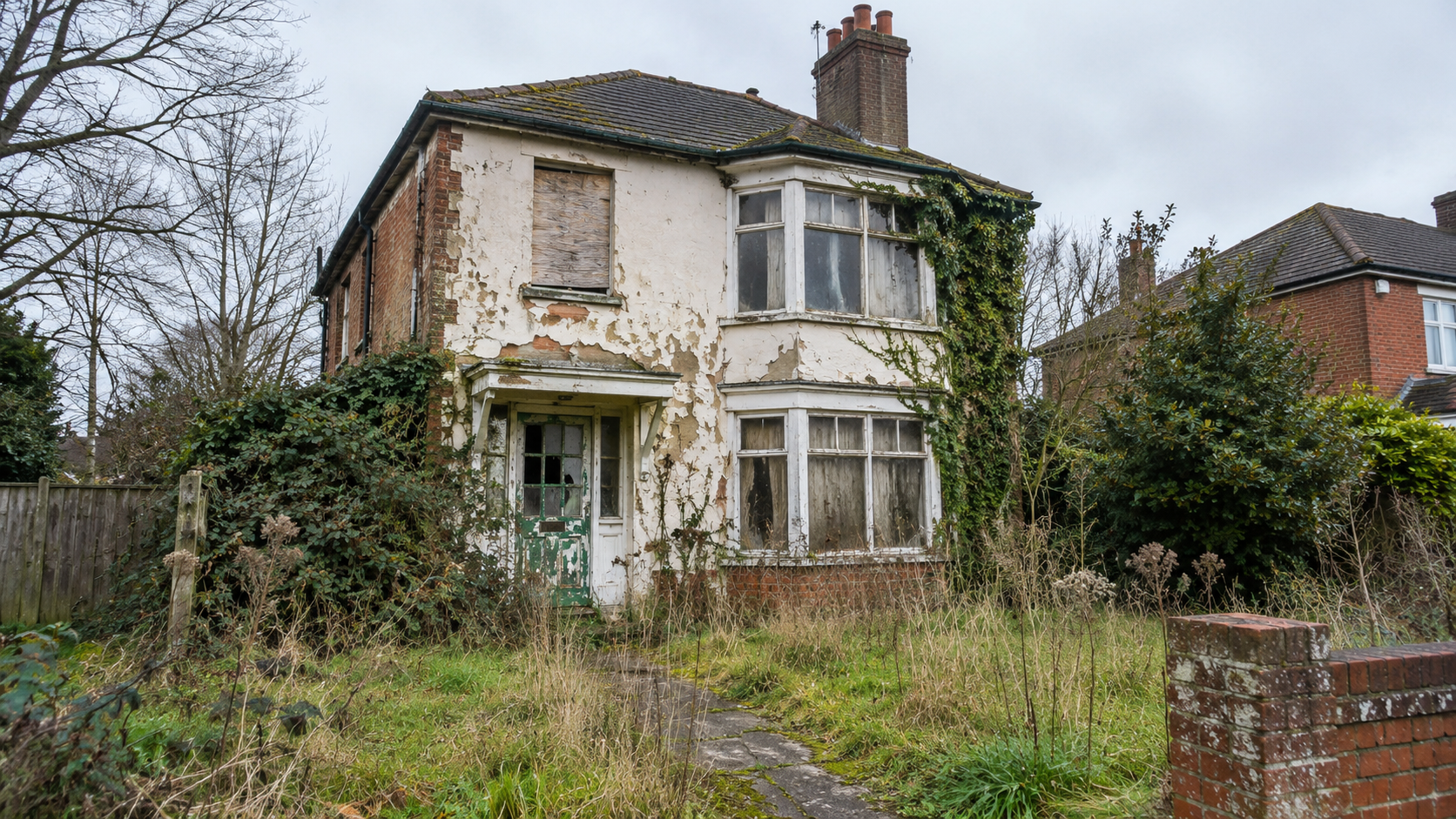
A house does not have to be falling apart to become vulnerable. Sometimes a property has simply stood empty following the death of its owner. In other cases, a relative has moved into care, ownership is being resolved, or the house has remained untouched for years while the family decides what should happen next.
From the street it may look abandoned. Inside, however, it might still contain an entire lifetime of possessions: furniture, jewellery, family photographs, certificates, wills, old letters, antiques and personal paperwork. These belongings can be especially important when the property forms part of a deceased estate.
At Scotland House Clearance, we understand that the priority is not always simply removing everything as quickly as possible. Families and their representatives may first need the property inspected, its security assessed, important possessions identified and clear decisions made about what should be retained.
Why Abandoned Houses Can Become Vulnerable
An empty property can attract unwanted attention, particularly when it is visibly neglected, has an overgrown garden or appears to have been left undisturbed for a considerable period.
The popularity of so-called urban exploration, often shortened to “urbex”, has added another concern for some property owners. People sometimes enter apparently abandoned buildings to record photographs and videos for YouTube, TikTok and other social-media platforms.
Not everyone documenting an old building causes damage. Nevertheless, unauthorised entry can expose a property to broken windows, damaged locks, theft, vandalism and further intrusions. Unsafe floors, damaged roofs, exposed wiring and deteriorating structures can also endanger anyone entering.
An online video showing the interior of an apparently abandoned house may reveal that access is possible or that possessions remain inside. This can create understandable concern for families and executors who have not yet had an opportunity to deal with the property.
Even when a house looks deserted, it is still essential to establish who has legal authority over it. The contents should not be assumed to be unwanted, and clearance must only proceed with the appropriate instructions and permissions.
Securing an Empty or Abandoned Property
Before a neglected house can be cleared, it may be necessary to establish whether the building is safe to enter and whether doors, windows and other access points are secure.
Depending on the property’s condition and the client’s instructions, we can assess its clearance requirements and help coordinate appropriate security arrangements with qualified contractors where needed.
These arrangements may include:
- Checking the visible condition of accessible doors and windows.
- Identifying signs of unauthorised entry or vandalism.
- Discussing lock replacement or additional security with an authorised locksmith.
- Arranging suitable boarding or temporary protection where appropriate.
- Identifying areas that require professional safety inspections before work begins.
- Planning the clearance to minimise unnecessary periods when the property is open or unattended.
Where specialist security work, structural repairs or hazardous-material inspections are needed, these should be undertaken by appropriately qualified professionals.
Our role is to help the authorised client plan and arrange the clearance and any agreed associated services. We do not treat an apparently empty building as permission to enter or take possession of it.
Abandoned House Clearance for Solicitors, Executors and Families
A significant number of long-empty houses are connected with changes in family circumstances. The previous owner may have died, moved permanently into residential care, or left the property to relatives who live some distance away.
For solicitors and executors, the challenge can be particularly complicated. There may be uncertainty about the contents, limited knowledge of the property’s condition, important paperwork still inside and a need to secure the building while estate matters are being dealt with.
We can discuss clearance arrangements with solicitors, executors and authorised representatives, including cases where the person instructing us is unable to attend the property personally.
The work can be planned around written instructions identifying which rooms are to be cleared, what should remain and which possessions should be set aside for inspection.
Where an estate is involved, we recognise the importance of preserving documents and personal effects that may be relevant to the estate administration. Items requiring decisions from the executor or family can be separated rather than automatically removed.
A property that has stood empty for many years can still contain valuable or deeply personal belongings. Taking time to establish suitable instructions before clearance begins can avoid mistakes that would otherwise be difficult to reverse.
Recovering Valuables, Important Paperwork and Sentimental Items
One of the most important considerations when clearing an abandoned or long-neglected house is what may be hidden among the contents.
Jewellery can be concealed inside drawers, boxes, old clothing or furniture. Important documents may remain in filing cabinets, envelopes, cupboards or even among apparently ordinary household papers.
Depending on the property, belongings worth identifying may include:
- Gold jewellery, watches and other precious-metal items.
- Antiques, silver, coins, medals and collectables.
- Wills, certificates, deeds and other important documents.
- Family photographs, letters and personal memorabilia.
- Banking, pension, insurance and estate-related paperwork.
- Keys, identity documents and records relevant to the property.
Where requested, we can undertake an agreed pre-clearance search for valuables and important belongings before the main contents removal begins.
Any items identified for retention can be kept separate for the authorised representative to examine. Particularly sensitive information or documents should be handled confidentially and not included with ordinary waste.
Free Pre-Clearance Asset Recovery Search
If no items of value are found during an agreed asset recovery search, there is no asset recovery search charge. Any remuneration relating to recovered valuables is discussed and agreed separately with the authorised client.
The purpose is to make sure potentially important belongings are considered before the property is emptied, rather than discovering too late that something meaningful has been discarded.
How Our Abandoned Property Clearance Process Works
1. Initial Enquiry and Authority
We discuss the location, history and known condition of the property, together with the customer’s legal authority to arrange the work. Any reported break-ins, structural concerns or access difficulties should be mentioned at this stage.
2. Property Assessment
We establish what can safely be assessed and whether specialist checks or security work are required before clearance. The amount of furniture, accumulated belongings and waste is considered when planning the work.
3. Identify Belongings to Retain
We agree instructions concerning jewellery, documents, photographs, antiques and other personal possessions. Where suitable, a separate asset recovery search can be arranged.
4. Clear the Agreed Contents
Our team carries out the agreed clearance, separating retained possessions from items designated for removal. Suitable items may be considered for reuse, donation or recycling where practicable.
5. Final Checks and Security Arrangements
At completion, we can discuss the condition in which the property is to be left and any previously agreed security or follow-on cleaning arrangements. Structural repairs, specialist decontamination and locksmith services are assessed separately where needed.
Hoarded, Neglected and Potentially Unsafe Properties
Some abandoned houses are still fully furnished but otherwise relatively straightforward to clear. Others have suffered from years of damp, leaking roofs, broken windows, pest activity or significant accumulations of waste.
There may also be severe hoarding, with rooms difficult to access and possessions stacked from floor to ceiling. In these circumstances it is especially important not to rush into clearing rooms without first assessing safety and agreeing which belongings must be protected.
Possible hazards include damaged floors, unstable piles of belongings, sharp materials, contaminated waste, mould and potentially hazardous building materials.
Where conditions suggest asbestos, unsafe electrics, structural instability or other specialist risks, appropriate professional assessment must take place before affected areas are entered or disturbed.
Our team can discuss both full and partial clearance requirements. The aim is to develop a workable plan for the property rather than assuming every abandoned building can be treated like an ordinary furnished house.
How Much Does Abandoned House Clearance Cost in Scotland?
The cost of clearing an abandoned or long-empty house depends on more than the number of rooms. A property left untouched for years may require additional assessment, restricted access arrangements or specialist waste handling.
Important factors include:
- The amount and type of household contents.
- Whether the property is severely cluttered or hoarded.
- Access for vehicles, equipment and removal teams.
- The condition of floors, stairs and entrances.
- Whether an asset recovery search is requested.
- Any separately required locksmith, boarding or security work.
- The need for specialist disposal or follow-on cleaning.
We offer free, no-obligation quotations for suitable clearance enquiries. Any additional security or specialist services can be discussed and priced according to the requirements of the property.
No VAT is added to our agreed house clearance charges.
For general pricing information, see our house clearance costs guide.
Frequently Asked Questions About Abandoned House Clearance
Can you clear a house that has been empty for many years?
Yes, subject to the property being suitable for safe clearance and the customer having the necessary authority. We can discuss properties containing old furniture, extensive clutter, accumulated belongings and general household contents.
Can you help if people have broken into the property?
We can discuss the clearance and help coordinate suitable security arrangements with appropriate contractors. Where a break-in is suspected, the matter should also be reported to the police and any relevant insurer before evidence or damaged entry points are disturbed.
Can a solicitor or executor arrange the clearance remotely?
Yes. We can discuss arrangements with an authorised representative, including written instructions and suitable property access arrangements.
Will you search for jewellery, documents or family photographs?
We can agree instructions to identify and set aside specified belongings. A separate pre-clearance asset recovery search may also be available.
Can you clear an abandoned property without the owner’s permission?
No. We require appropriate authority from the owner or another person legally entitled to instruct the work. A house appearing abandoned does not mean its contents can be removed without permission.
Do you provide security repairs and boarding?
We can discuss whether these services are needed and help arrange suitable qualified contractors where agreed. Specialist security work is assessed and quoted separately.
HELP FOR FAMILIES, EXECUTORS & SOLICITORS
Abandoned House Clearance Scotland — Request a Quote
If you are responsible for a neglected, abandoned or long-empty house, tell us about the property, its condition and what needs to be done. We can discuss the clearance, important belongings and any security concerns.
Contact Scotland House Clearance
Free Quotations · Discreet Service · No VAT Charged